The Hidden Cost of Waste in Water Dispensing Systems
Most waste from water dispensing is hard to see in daily operations. It does not show up as rejected product or clear failures, and it rarely appears on invoices. That is exactly why it continues.
Water dispensing is typically treated as a background utility: something that should work quietly, draw little attention, and stay off the agenda unless it breaks. As a result, the waste created by water systems accumulates gradually through inefficiency, oversizing, standby losses, downtime, and premature replacement. Over time, these costs become normalised and increasingly difficult to challenge.
For multi-site operators, this quiet accumulation is the real issue.
Contents
- Waste that doesn’t look like waste
- The long tail of short-term decisions
- Specification as waste prevention
- Why water deserves the same scrutiny as beer
Waste that doesn’t look like waste
Unlike beer, water systems rarely show waste in obvious ways. There are no rejected pours or customer complaints to prompt a closer look. Instead, waste shows up in higher energy use, more maintenance, and shorter equipment life.
Thermal inefficiency is a common problem. Systems that do not match real demand often keep temperatures steady for too long, using power without benefit. Sometimes, recovery is slow, so systems work harder and longer after use.
Oversizing is another issue. Systems are often built “just in case,” with much more capacity than sites actually need. This extra capacity does not go away. It uses more energy, makes the system more complex, and causes parts to wear out before they are even used.
Downtime makes things worse. Even short outages disrupt work, take up staff time, and lead to quick fixes that do not solve the real problem. None of this is counted as water waste, but it all adds to costs.
The long tail of short-term decisions
Many of these issues originate at specification stage. Decisions made to reduce upfront cost or simplify approval frequently increase lifetime waste instead.
A system that is cheap to buy but expensive to run will use more energy over its life. Equipment that is hard to service often runs outside its best conditions for too long. Systems not built to last are replaced sooner, which increases waste across all sites.
Each of these compromises may seem manageable on its own. Together, they make systems quietly expensive to run and hard to explain.
This is why water systems are often misunderstood. Most of their cost and waste sits in long-term performance, not in the initial purchase.
Specification as waste prevention
Better specification does not mean higher specification everywhere. It means more appropriate specification.
When water systems are designed around real demand profiles rather than assumptions, unnecessary capacity can be removed. When thermal efficiency and recovery are considered together, energy draw can be reduced without compromising availability. When serviceability and lifespan are treated as design priorities, systems stay within specification for longer rather than degrading invisibly.
At the estate level, this approach reduces operational slowdowns. Engineers have more time, energy use is more predictable, and replacements can be planned instead of rushed. The system is also easier to standardise because it works consistently.
This is waste prevention by design, not by intervention.
Why water deserves the same scrutiny as beer
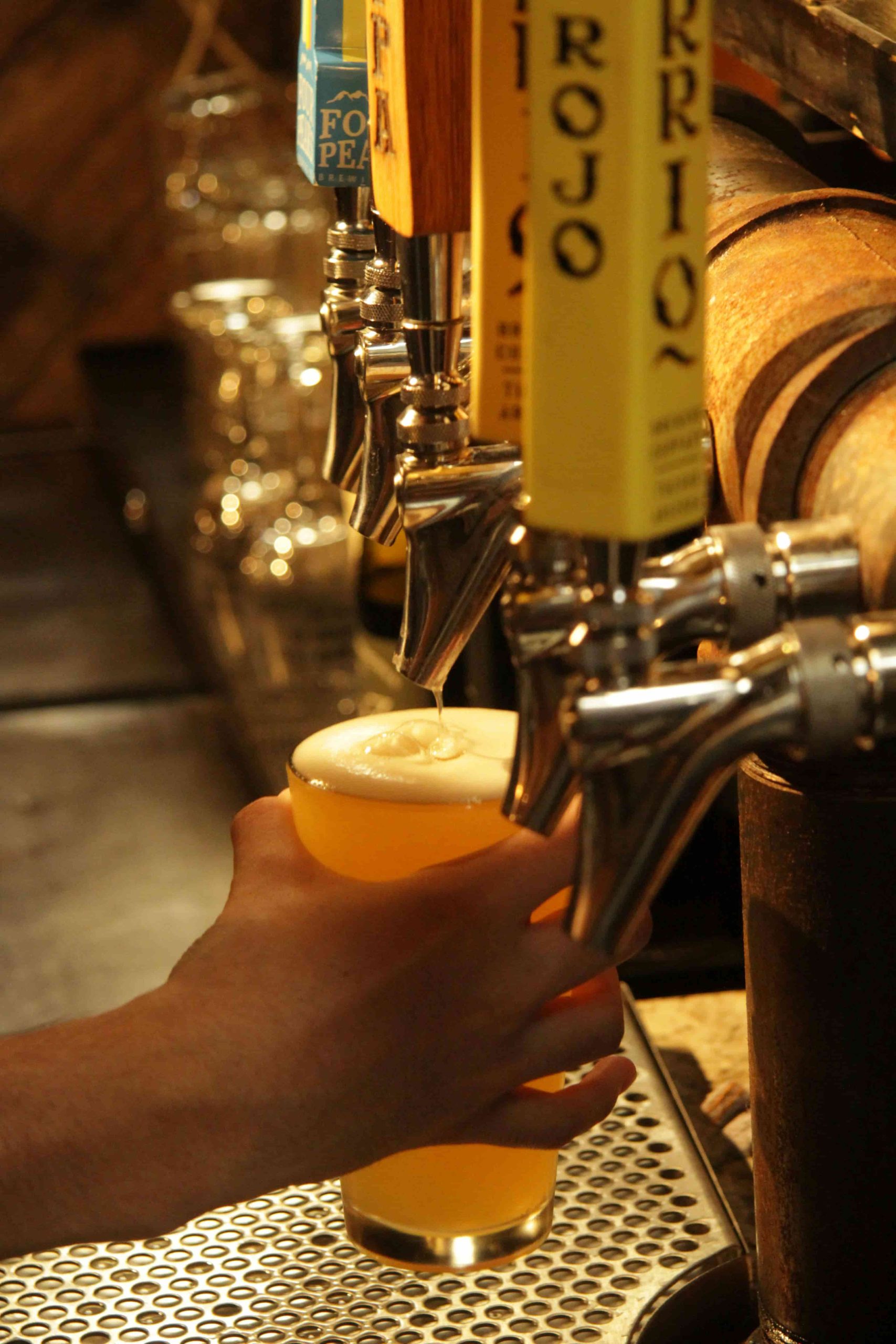
Beer systems get close attention because their quality is easy to see and important for the brand. Water systems do not get the same focus, even though they are used in more places, run longer hours, and steadily use energy.
As sustainability targets tighten and operating margins remain under pressure, this imbalance becomes harder to justify. Waste that is invisible is still waste. Systems that are merely “good enough” on day one often become liabilities over time.
For operators who already focus on dispense performance in other areas, water is an obvious place to use the same careful approach.
Explore water dispensing systems designed for long-term efficiency
See how Booth’s UK-built water cooling and dispensing ranges are engineered to reduce waste, simplify operation, and perform reliably over their full service life.
→ View our water cooling & dispensing systems